India is a land of incredible geographical and cultural diversity, yet most international and domestic itineraries revolve around the same celebrated destinations. While places like Jaipur, Goa, and the Taj Mahal capture the global spotlight, an entirely different world of untouched beauty remains tucked away in the quiet corners of the country.
From surreal geological formations carved over millions of years to remote border valleys that seem frozen in time, India holds a treasure trove of under-the-radar destinations.
For travelers who crave genuine discovery, striking landscapes, and rich heritage without the usual tourist frenzy, these hidden places in India deserve an immediate spot on your bucket list.
Gandikota, Andhra Pradesh: The Grand Canyon of India
Deep in the Kadapa district of Andhra Pradesh lies Gandikota, a stunning natural wonder that rivals some of the world’s most famous geological landmarks. Here, the Pennar River has carved a massive gorge through the Erramala Hills over thousands of years, creating dramatic red sandstone cliffs that plunge hundreds of feet into the river below.
Perched on the edge of this vast chasm sits the historic 13th-century Gandikota Fort. Walking through the stone ramparts and ancient granaries of the fort leads you directly to the gorge’s edge, where the views at sunset are breathtaking. Sitting on the smooth boulders as the evening light paints the red canyon walls in brilliant shades of gold and crimson is a bucket-list experience that very few travelers even know exists.
Gurez Valley, Jammu and Kashmir: A Borderland Paradise
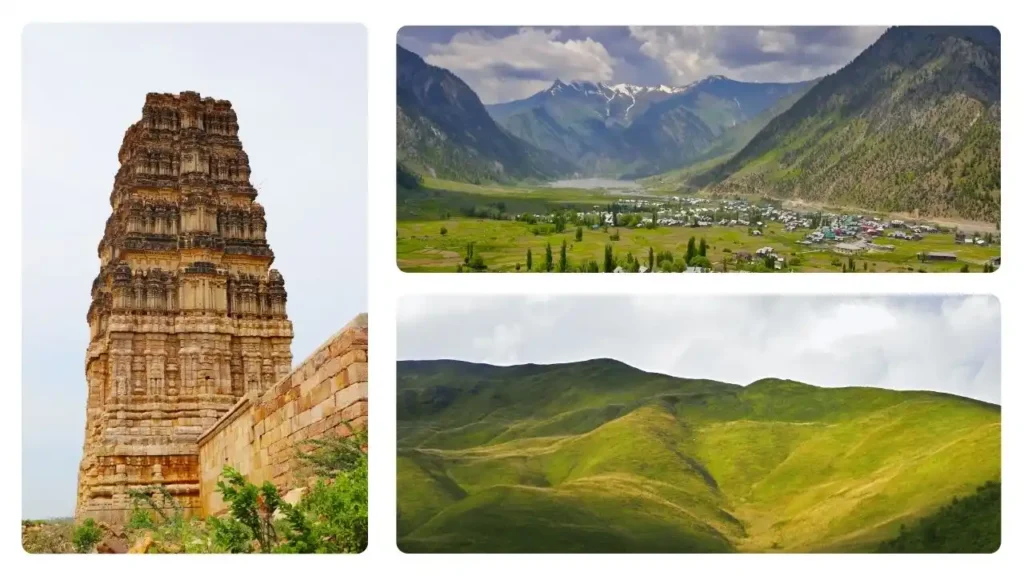
Located close to the Line of Control in northern Kashmir, Gurez Valley was closed to mainstream tourism for decades. Recently reopened to curious explorers, this high-altitude valley represents one of the most untouched and pristine landscapes in the entire Himalayan region.
Bisected by the crystal-clear Kishanganga River, Gurez Valley is dominated by the majestic Habba Khatoon, a pyramid-shaped mountain peak named after the famous 16th-century Kashmiri poetess. The valley is dotted with traditional wooden log homes where the local Shina tribe resides. Visiting Gurez feels like stepping back into a simpler, quieter era defined by roaring rivers, emerald pine forests, and warm mountain hospitality.
Mechuka, Arunachal Pradesh: The Forbidden Valley of the North East
Nestled high in the West Siang district of Arunachal Pradesh, just twenty kilometers from the Tibetan border, Mechuka is an ethereal valley surrounded by snow-capped peaks and pine-covered slopes. Due to its remote geographical location, reaching Mechuka requires a journey, but the reward is a landscape of unbelievable tranquility.
The Yargyapchu River winds gracefully through the flat green valley floor, crossed by traditional wooden suspension bridges. Mechuka is home to the Memba tribe and houses the Samten Yongcha Monastery, a 400-year-old Buddhist site that predates the famous Tawang Monastery. Horses graze freely across open pastures, mist rolls down from the mountains, and the air carries a deep sense of peace that is impossible to replicate in busy urban destinations.
Lonar Crater Lake, Maharashtra: A Prehistoric Astronomical Marvel
Roughly fifty thousand years ago, a massive meteor weighing nearly a million tons slammed into the basaltic rock of Maharashtra at astronomical speeds. The impact created the Lonar Crater Lake, one of the world’s only hyper-velocity impact craters formed in basaltic rock, making it a place of immense interest to scientists and nature lovers alike.
Tucked away in the Buldhana district, the crater lake is surrounded by a dense forest ecosystem that houses ancient, crumbling stone temples. The lake itself possesses unique chemical properties, being both saline and alkaline at the same time. Hiking down into the crater through thick green jungle canopy feels like uncovering a lost world where astronomy, ancient history, and raw nature converge.
Champaner-Pavagadh, Gujarat: The Lost City in the Jungle
While Gujarat is famous for the Great Rann of Kutch and Gir National Park, the UNESCO World Heritage Site of Champaner-Pavagadh remains astonishingly quiet. This ancient city presents a remarkable blend of Hindu and Islamic architecture, with grand mosques, fortresses, and stepwells built over several centuries.
The historical ruins sit at the base of Pavagadh Hill, partially engulfed by dense forest greenery, giving the entire complex a mysterious and forgotten atmosphere. Highlights include the Jama Masjid, an architectural masterpiece featuring intricate stone carving and towering minarets that catch the morning light. Exploring Champaner allows you to wander through grand historical monuments in near solitude, far away from the commercial tourist trail.
Why You Should Seek Out Hidden Destinations
Adding lesser-known locations to your travel plans transforms a simple holiday into a meaningful adventure. Offbeat places offer authentic cultural interactions, as local communities welcome visitors with genuine warmth rather than commercialized routines.
Furthermore, spreading tourism beyond overcrowded hotspots actively supports sustainable travel practices. It brings economic benefits to remote regions while preserving the delicate ecosystems and heritage of these secret landscapes for generations to come.