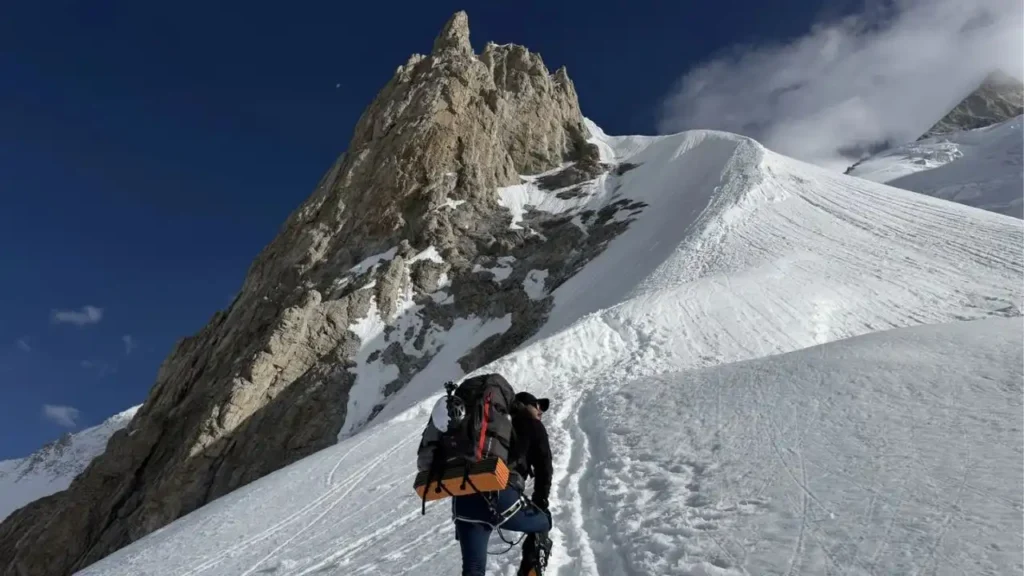
By Travel Insight Global News Desk
TL;DR / Quick Summary:
- Project Possible 14/7: Scaled all 14 of the world’s 8,000-meter “death zone” peaks in just 6 months and 6 days in 2019.
- First Winter Ascent of K2: Co-led the historic team that achieved the first-ever winter summit of K2 in January 2021, climbing without supplemental oxygen.
- Military Background: A former Royal Navy Special Boat Service (SBS) commando who used military logistics to revolutionize high-altitude climbing.
- Elevating Nepali Mountaineers: Brought global recognition to Nepali Sherpas and indigenous high-altitude climbers.
High-altitude mountaineering was historically defined by decades of slow, methodical progression. For years, scaling all fourteen of the world’s mountains above 8,000 meters was considered a lifetime achievement that took athletes nearly a decade to complete.
That narrative changed when Nepalese-born mountaineer Nirmal “Nimsdai” Purja redefined the limits of human endurance by setting two monumental world records that permanently altered extreme adventure travel.
Record 1: Scaling All 14 Eight-Thousand-Meter Peaks in 6 Months and 6 Days
In April 2019, Nirmal Purja launched an audacious initiative called Project Possible 14/7. His goal was simple yet seemingly impossible: summit all 14 of the world’s mountains above 8,000 meters located across the Himalayas and Karakoram ranges within seven months.
The previous world record for completing all 14 peaks stood at 7 years, 11 months, and 14 days, set by South Korean climber Kim Chang-ho.
Purja began his expedition on Annapurna in Nepal on April 23, 2019, and completed his final summit on Shishapangma in Tibet on October 29, 2019. He accomplished the monumental feat in just 189 days (6 months and 6 days), shattering the previous speed record and proving that relentless planning and physical conditioning could redefine high-altitude logistics.
During this expedition, he also set sub-records, including scaling Everest, Lhotse, and Makalu back-to-back in an astonishing 48 hours and 30 minutes.
Record 2: The Historic First-Ever Winter Ascent of K2
While Project Possible made Purja a global name, his second defining world record tackled one of extreme mountaineering’s final great frontiers: conquering K2 in winter.
Known as the “Savage Mountain,” K2 is the world’s second-highest peak and is widely regarded as far more dangerous and technically demanding than Mount Everest. By late 2020, K2 remained the only 8,000-meter peak on Earth that had never been successfully summited during the harsh winter season, where winds exceed hurricane force and temperatures plunge below minus 60 degrees Celsius.
On January 16, 2021, Purja co-led an all-Nepali team of 10 climbers to the summit of K2. In a display of unity, the climbers regrouped 10 meters below the peak and stepped onto the summit together while singing the Nepali national anthem.
To add to the legendary nature of the achievement, Purja completed the entire winter ascent of K2 without using supplemental oxygen, a feat that experts had previously deemed physically impossible under winter weather conditions.
From Special Forces Commando to High-Altitude Pioneer
Before entering the world of elite mountaineering, Purja served for 16 years in the British Military, first with the famed Brigade of Gurkhas and later as a cold-weather warfare specialist in the elite Royal Navy Special Boat Service (SBS).
His military background provided him with advanced tactical training, risk management discipline, and high-altitude physiological resilience that he applied directly to extreme mountain climbing.
Beyond personal records, Purja utilized his global platform to elevate the status of Nepali Sherpas and indigenous climbers, ensuring that local guide communities received proper credit, leadership roles, and commercial recognition in international expedition history.
Key Takeaways for High-Altitude Travelers and Adventurers
- Logistics Matter as Much as Fitness: Purja’s success relied on meticulous planning, weather tracking, and diplomatic permits alongside physical endurance.
- Respect the Death Zone: Extreme high-altitude travel above 8,000 meters requires specialized training, expert guides, and strict safety margins.
- Team Unity Drives Results: The historic K2 winter summit succeeded because competing Nepali climbing groups joined forces to accomplish a shared goal.